
La invención de los cubiertos / The invention of cutlery
La invención de los
cubiertos
The invention of cutlery
- Herramientas para alimentarse
- Tools to feed
Aunque en la
actualidad son muy comunes, en épocas anteriores era alimentarse directamente
con las manos, esto significa, que la invención de los cubiertos es algo más o
menos reciente.
El primero en ser
creado, fue la cuchara, estas vienen del neolítico y eran fabricadas con hueso,
cuerno o madera, a partir de este punto se fue popularizando y apareció en
distintas culturas, como en la Olmeca en América, por el siglo IX a.c. o en la
antigua cultura Helénica de Europa el siglo III a.c. (CurioSfera, n.d.).
El segundo en aparecer
fue el cuchillo y en la antigüedad era fabricado con piedra, hueso o cobre. El
cuchillo de mesa moderno o de punta redonda, es atribuido al Cardenal Richelieu
y fue creado en el año 1630, cuando mandó a eliminar la punta de los cuchillos
de su casa, ya que no le gustaba ver como los comensales los utilizaban como
mondadientes (Herrero, 2022).
El tercero en ser
diseñado fue el tenedor, este fue un invento de Teodora en el siglo XI, hija
del emperador Constantino X, aunque su invento no fue tomado de buena manera en
la época. Posteriormente, en el año 1533, fue Catalina de Médici, quien en su
boda con Enrique II de Francia, lo volvió a poner de moda y se ha seguido
utilizando hasta la actualidad (Crisol, n.d.).
Cutlery for children
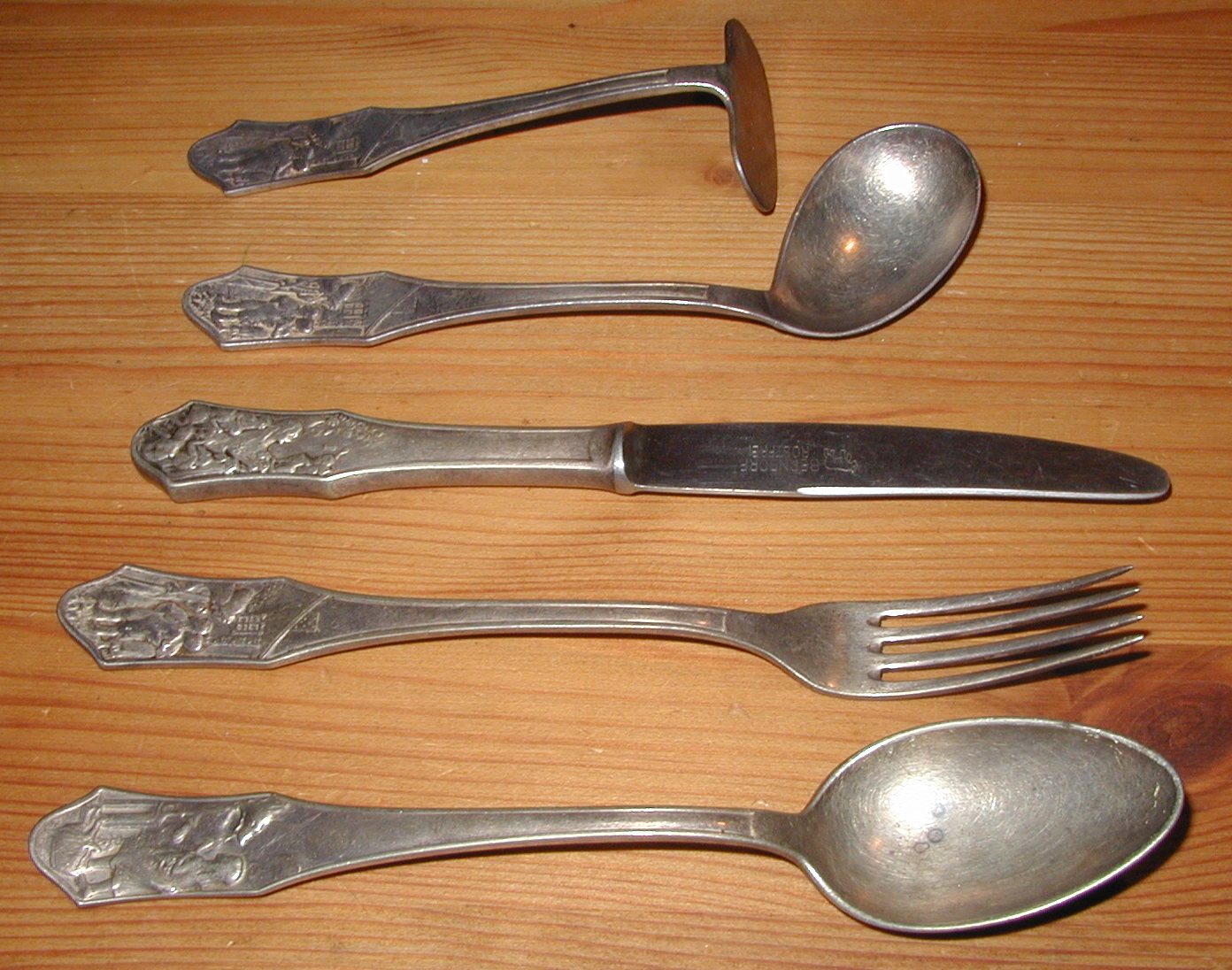
Although nowadays they are very common, in previous times it was fed directly with the hands, this means that the invention of cutlery is something more or less recent.
The first to be created was the spoon, these come from the Neolithic and were made of bone, horn or wood, from this point it became popular and appeared in different cultures, such as the Olmec in America, around the 9th century BC. or in the ancient Hellenic culture of Europe the 3rd century B.C. (CurioSfera, n.d.).
The second to appear was the knife and in ancient times it was made of stone, bone or copper. The modern or round-tipped table knife is attributed to Cardinal Richelieu and was created in 1630, when he ordered the tip of knives removed from his house, since he did not like to see how diners used them as toothpicks (Herrero, 2022).
The third to be designed was the fork, this was an invention of Theodora in the 11th century, daughter of Emperor Constantine X, although her invention was not taken in a good way at the time. Later, in 1533, it was Catherine de Médici who, at her wedding to Henry II of France, brought it back into fashion and it has continued to be used to the present day (Crisol, n.d.).
Referencias / References:
The first to be created was the spoon, these come from the Neolithic and were made of bone, horn or wood, from this point it became popular and appeared in different cultures, such as the Olmec in America, around the 9th century BC. or in the ancient Hellenic culture of Europe the 3rd century B.C. (CurioSfera, n.d.).
The second to appear was the knife and in ancient times it was made of stone, bone or copper. The modern or round-tipped table knife is attributed to Cardinal Richelieu and was created in 1630, when he ordered the tip of knives removed from his house, since he did not like to see how diners used them as toothpicks (Herrero, 2022).
The third to be designed was the fork, this was an invention of Theodora in the 11th century, daughter of Emperor Constantine X, although her invention was not taken in a good way at the time. Later, in 1533, it was Catherine de Médici who, at her wedding to Henry II of France, brought it back into fashion and it has continued to be used to the present day (Crisol, n.d.).
Referencias / References:
Crisol. (n.d.). Origen
de los cubiertos. https://www.grupocrisol.com/sugerencias/curiosidades/cuberteria/origen_de_los_cubiertos/2/
CurioSfera. (n.d.). Historia
de los cubiertos: origen y evolución. https://curiosfera-historia.com/historia-de-los-cubiertos/
Herrero, J. (2022). El
origen de los cubiertos: ¿Cómo surgieron la cuchara, el cuchillo y el tenedor?.
La Razón. https://www.larazon.es/sociedad/20220113/5waxolkz3jbuxpqr4ef25k6xea.html
Cómo citar este artículo:
Nocetti, F.A. (2022). La invención de los cubiertos. NabbuBlog. http://nabbublog.blogspot.com/2022/07/la-invencion-de-los-cubiertos-invention.html
How to cite this article:
Nocetti, F.A. (2022). The invention of cutlery. NabbuBlog. http://nabbublog.blogspot.com/2022/07/la-invencion-de-los-cubiertos-invention.html